

Minnesota’s Economic Engine

Minnesota’s Public Schools are Minnesota’s Economic Engine
The students learning in Minnesota public schools today will become the people who shape our state tomorrow. That makes strong public schools an important part of Minnesota’s long-term economic strength.
Public schools help students build the knowledge, skills and experiences they need to find their path and contribute to communities across Minnesota. As our population changes, helping every student reach their potential will matter even more to communities and employers throughout the state.
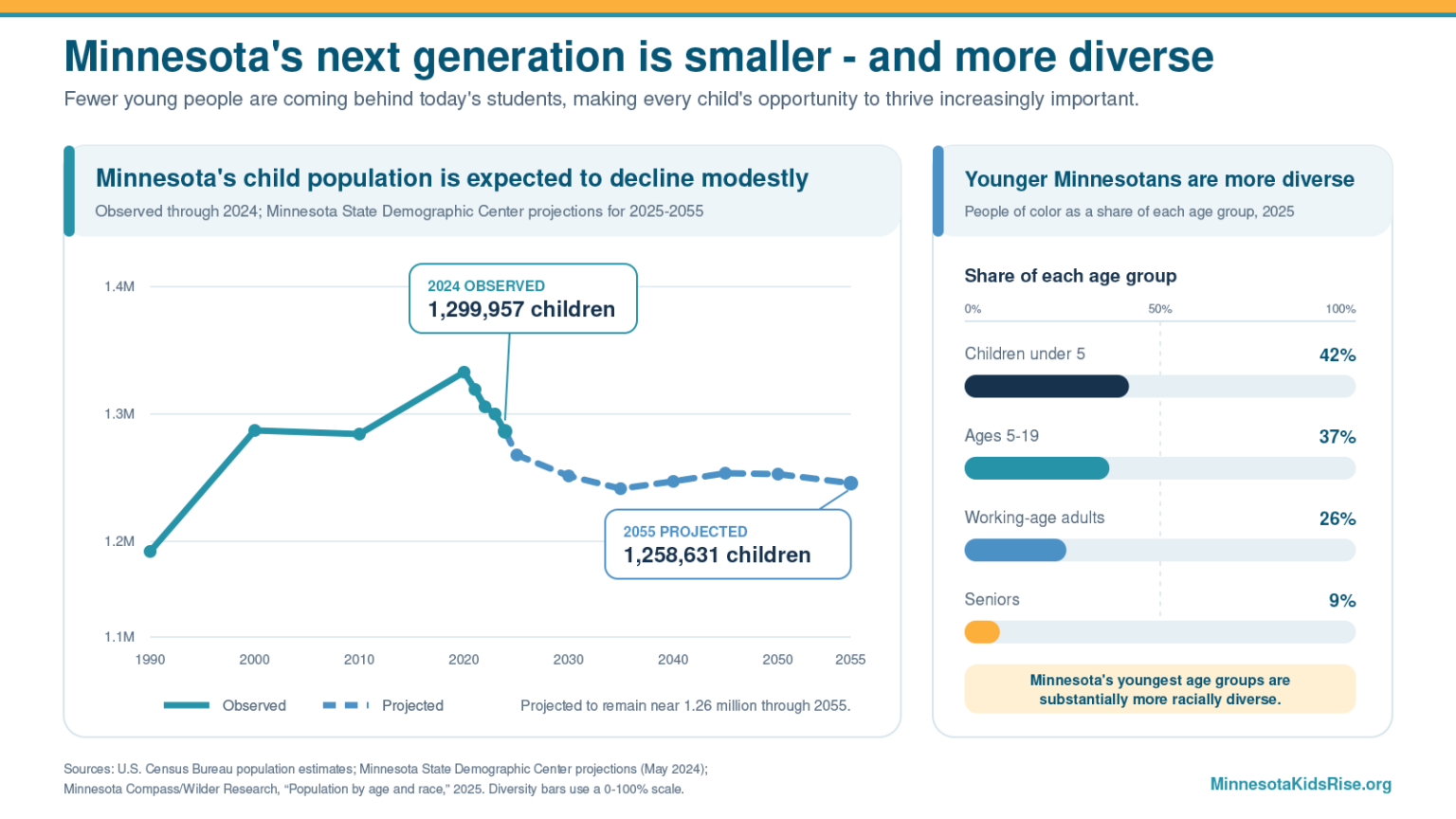
Minnesota has fewer young people coming behind today’s students. And these young people are increasing in diversity.
As Minnesota ages and the youth population slowly declines, helping every student develop their potential will become increasingly important to the state’s workforce and economic future. And as the state of Minnesota increases in diversity, every student represents potential Minnesota cannot afford to overlook.
Minnesota’s Class of 2025 achieved the highest four-year graduation rate in state history: 84.9%, up from the previous record of 84.2% in 2024.
Every diploma represents a young person prepared to take another step toward employment, additional education, service and community life. Helping more students reach graduation strengthens Minnesota’s shared future.
Public schools don’t just prepare Minnesota’s future workforce. They’re a major part of Minnesota’s workforce today.
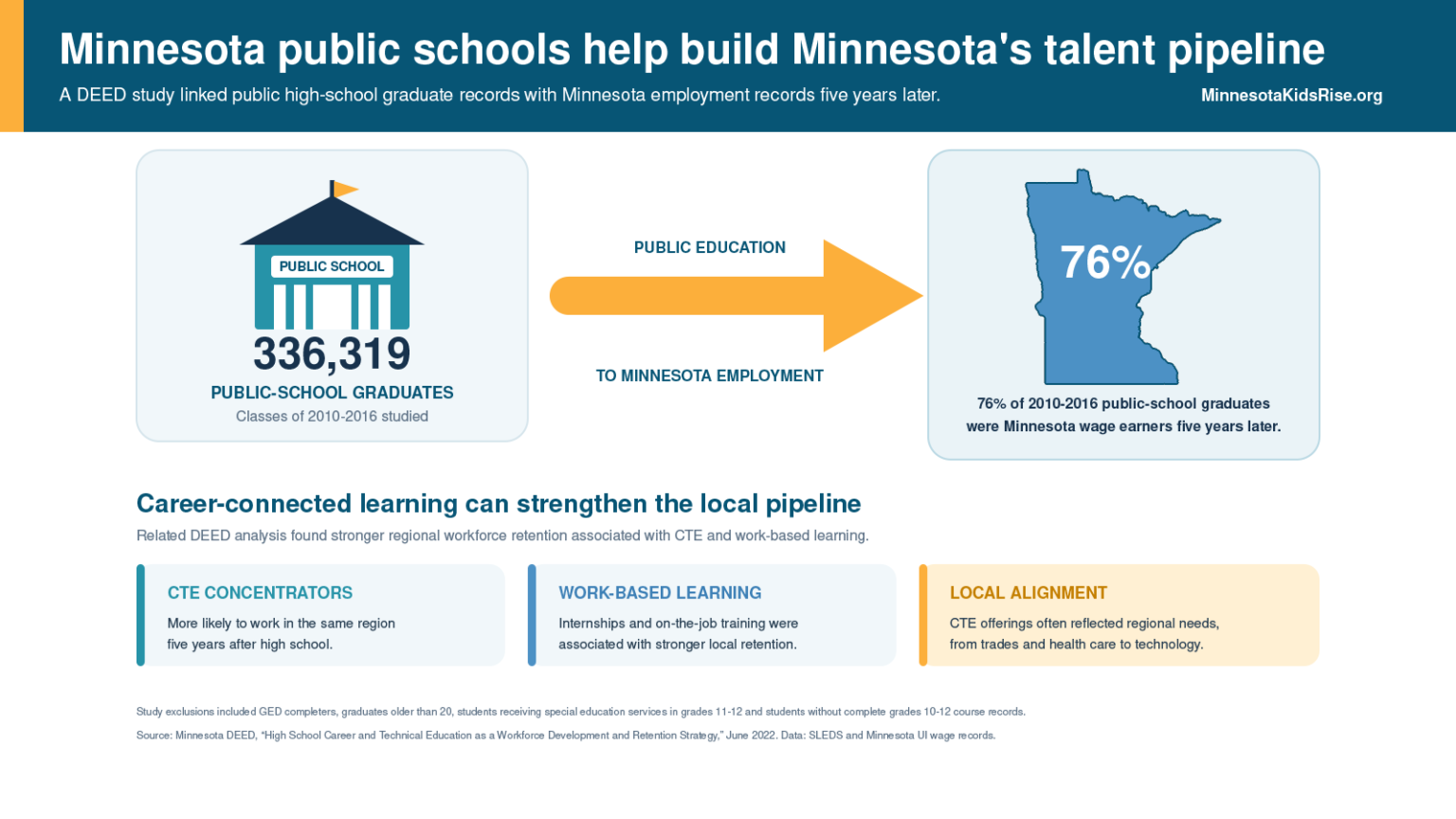
336,319 Minnesota public high-school graduates from 2010–2016 were tracked into employment. Five years after graduation, 76% had a Minnesota employment record. Updated data will be provided as it is available.
Minnesota’s economy depends on a continuous pipeline of skilled workers. The state anticipates nearly 3.6 million hires between 2022 and 2032 as businesses add jobs and replace workers who retire, leave the workforce or change occupations.
Public schools are themselves major economic institutions across Minnesota communities
Public schools are major economic engines.
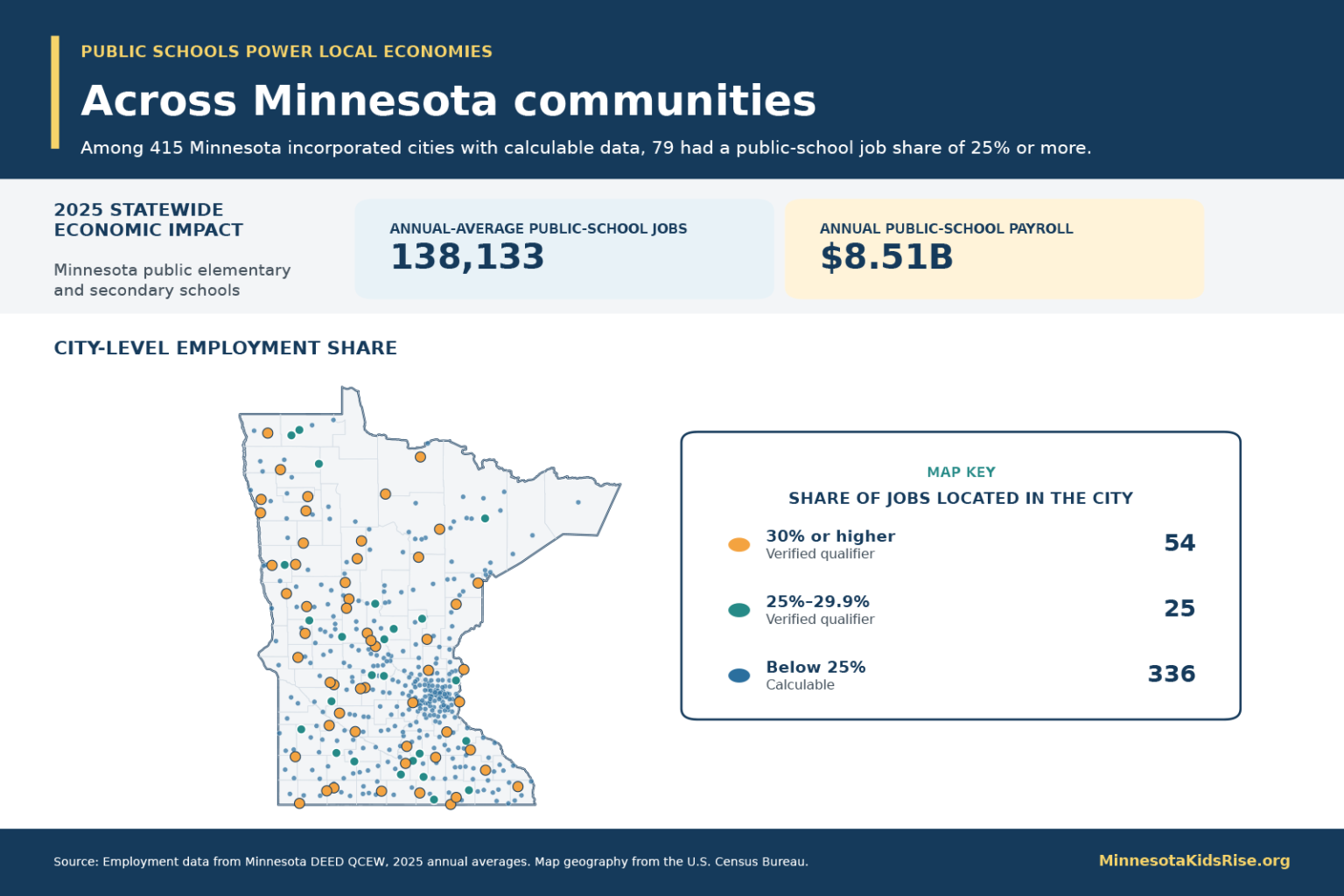
Minnesota’s public elementary and secondary schools supported nearly 139,000 jobs and generated more than $8.5 billion in payroll in 2025.
In many Minnesota communities, public schools are among the largest employers. In 79 of 415 Minnesota communities with available data, public schools account for at least 25% of local jobs. From teachers to bus drivers to principals to food service workers to coaches to paraprofessionals, there is an entire infrastructure of community members supporting public education in communities across Minnesota.
Public schools provide essential infrastructure for Minnesota’s working families.
More than 70,000 students participate in school-age care, helping parents remain in the workforce while children have safe places to learn, connect and grow. That role is especially important because 76% of Minnesota’s young children have all available parents in the workforce.